Aurora Runs on Fluid and Minerals, Not Water Alone
Hydration is two jobs, not one. Water restores volume. Sodium, potassium, magnesium and chloride hold that volume where the body can use it, and only one of the two comes out of a tap.
So why does this city keep running short? Start with who is awake. Aurora’s medical corridor never fully closes, and neither do the shifts that run it.
The CU Anschutz campus in Aurora is powered by more than 13,000 employees, making it the largest academic health center in the Rocky Mountain region.
Shift work pushes drinking to the edges of a day. A nurse finishing at Children’s Colorado, a technician coming off nights near Buckley Space Force Base and a parent driving the Cherry Creek corridor before sunrise share one pattern: fluid leaves all shift, intake gets squeezed into two short breaks. By the end of a stretch like that, IV therapy for dehydration symptoms is often what gets searched.
Weekends work the other end of the same problem. Aurora is built for outdoor hours, and the trails sit close enough to home that nobody treats them as an expedition worth packing for.
The City of Aurora lists a 3.5-mile trail at Quincy Reservoir, in the middle of town.
Dry air finishes the job quietly. Moisture moves out through skin and breath at a rate that never feels like effort, so the running total at the end of a day is larger than the day felt. Minerals go with it, which is the part water does not answer.
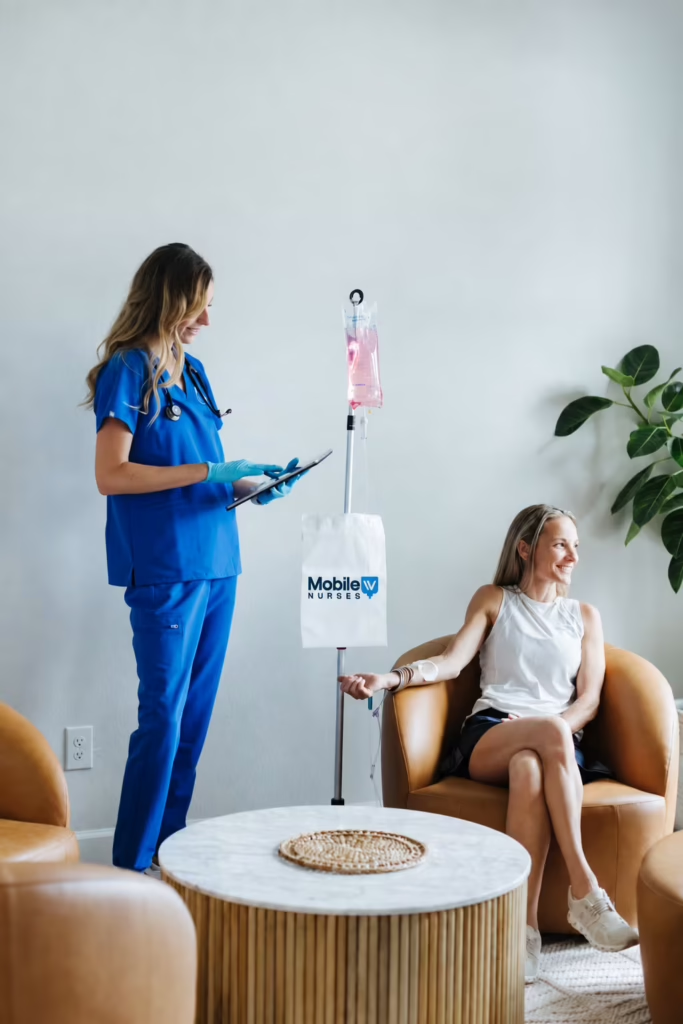
What an IV changes is the delivery route rather than the chemistry. Fluid and electrolytes enter the bloodstream directly, which may help restore fluid balance faster than drinking once the gap is wide. The Purely Saline IV hydration package covers volume replacement on its own.
From there the choice is about what else to include. Vitamins and minerals such as an IV vitamin B complex add-in are selected after a health screening rather than chosen from a menu alone, and anything that persists or worsens belongs with your physician.