How a Mobile IV Session Works in Avondale, Start to Finish
The process starts before anyone touches a needle. A licensed healthcare professional arrives, sits down, and walks through a health screening that covers current symptoms, medical history, medications, and what prompted the appointment. That conversation is where the drip formulation gets decided, not at a checkout page. A resident recovering from a Saturday at the Tres Rios Wetlands and a resident dealing with allergy fatigue in Coldwater Springs need different things. The intake separates the two.
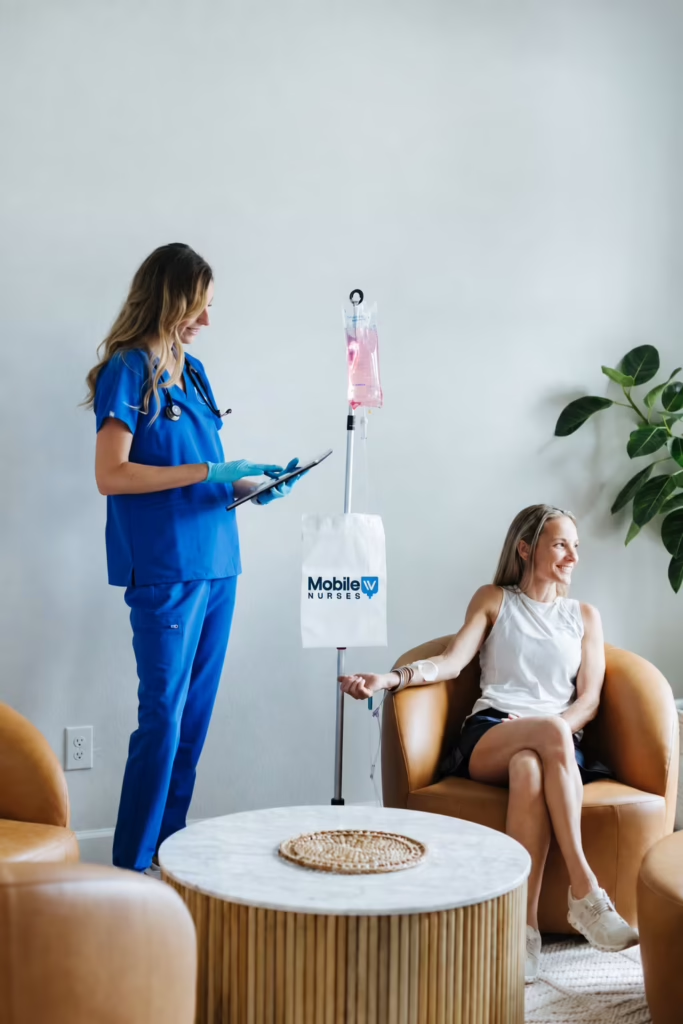
Once the formulation is set, a small catheter goes into a vein in the arm, and a saline-based solution begins dripping directly into the bloodstream. Because IV delivery bypasses the digestive tract, fluids and nutrients reach the cells without the absorption delay that oral intake faces. In a city where summer temperatures push past 107°F and humidity sits around 17% in June, that delivery speed has a practical application: the body can begin using what it needs within minutes rather than hours.
Does IV therapy hurt, and how long does a session take?
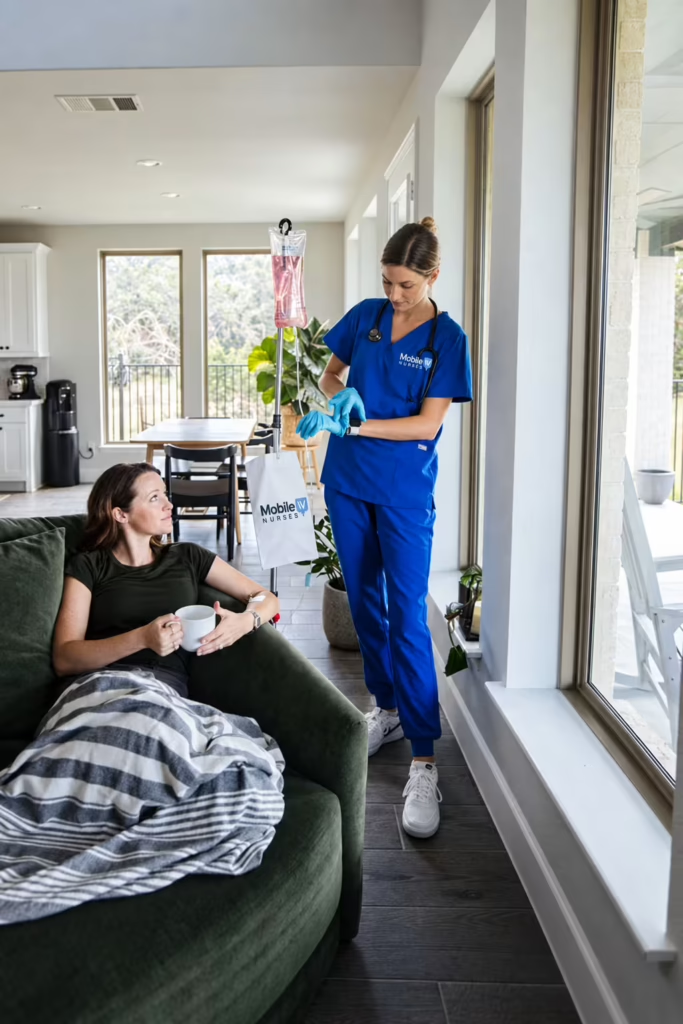
Most clients describe the needle stick as brief, similar to a standard blood draw. The session itself runs about 45 to 60 minutes. During that time, a nurse monitors vitals and adjusts the drip rate. Sitting on the couch in Garden Lakes or at a kitchen table in Rancho Santa Fe, the experience is closer to a quiet hour at home than anything clinical.
Can the drip be customized during the visit?
Yes. The intake conversation is where add-ins like vitamin B12, magnesium, or glutathione get discussed. A client heading into a Phoenix Raceway weekend might add an immune-support component. Someone managing afternoon energy dips might lean toward B-complex and taurine. Every addition is reviewed before it enters the bag.
Once the bag is finished, the line comes out, the site gets bandaged, and the nurse cleans up. Most clients describe the rest of their day as noticeably different from where it started.