Mobile IV Nurses, Lone Star IV Medics, & Rocky Mountain IV Medics. Three Trusted Brands – One Standard of Excellence.


Mobile IV Nurses, Lone Star IV Medics, & Rocky Mountain IV Medics. Three Trusted Brands – One Standard of Excellence.

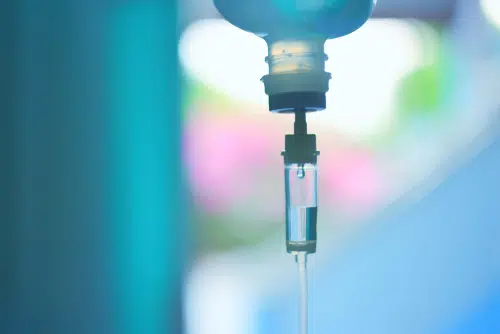
You probably already know you can find IVs with vitamins and medications that address specific health concerns to provide maximum benefits. But did you know the fluid itself can also do the same? IV fluid is the backbone of IV treatment, giving your body the immediate benefits of rehydration and essential electrolytes while also acting as the ideal vehicle for the vitamins, minerals, and other ingredients included in the IV drip.
Different types of IV fluids serve specific purposes. The patient’s health condition will determine the choice of IV fluid. For instance, a fluid that may work well for someone with kidney disease may not be best for a malnourished person. This is because the building blocks of IV fluids are fine-tuned to benefit certain aspects of our bodily functions.
So what are IV fluids, exactly? To better understand how an IV can help you, it’s wise to learn about the various kinds of fluids, and which ones may work best for you and your individual health needs. But first, let’s look at why you may need an IV in the first place.
Our bodies run on a finely calibrated system called homeostasis. We achieve this state when our levels of fluids, oxygen, and electrolytes are balanced. If our fluid levels are thrown off balance, from sickness or injury, for instance, then our bodies are no longer existing in homeostasis. This means that the cells in our bodies aren’t receiving the electrolytes they need to perform their daily functions, helping to keep our immune system running and our bodies healthy and balanced. IV fluids help to support this balance, which you will read more about in the next section.
The human body requires fluid because it supplies our cells with the electrolytes they need to function. This happens with fluid moving in and out of cells through their semipermeable membranes (from the intracellular to the extracellular), also called osmosis. To prevent too much fluid from moving in or out of a cell, the body exerts osmotic pressure to keep a regular, constant, and even flow of fluids.
In this way, osmotic pressure prevents cells from getting too little or too much water. If the former happens, the cells may become dehydrated and shrink; in the latter, cells can become overfull to the point of rupture.
Sometimes, these cells can repair themselves, which is when intravenous fluids are helpful in reversing damage. If the damage isn’t or can’t be fixed, cellular death may occur. While regulated cell death is a normal function of the body, called apoptosis, this type of spontaneous or premature cellular death, also known as necrosis, can trigger inflammation that may negatively affect your health.
Foundationally, intravenous fluids are sterile saline solutions. That means they consist of two things: water and sodium chloride (the saline). Using sodium chloride and water in different ratios (to create high- or low-saline solutions) gives medical professionals different types of IV fluids to work with to address a wide variety of health concerns.
Additionally, certain IV fluids feature other ingredients as well. These solutions can include calcium, potassium, and a simple sugar known as dextrose. Again, these IV fluids target specific medical concerns, so a healthcare provider will carefully look at a patient’s health history and current symptoms to determine the optimal choice of treatment.
IV solutions are an ideal delivery system for vitamins, nutrients, and other supplements. The solutions are infused into the bloodstream to rapidly re-balance the body’s fluid levels and provide maximum absorption of the ingredients in the IV. This versatility and effectiveness allow providers to create different types of IVs for diverse treatment options. IVs bring fast, noticeable results.
There are two main types of IV fluids: crystalloids and colloids. In a crystalloid solution, the particles in the fluid are tiny enough to pass through the semi-permeable cellular membranes. In colloid IV solutions, the molecules are too big to cross the membranes. This allows the fluid to stay in your bloodstream rather than entering the cells.
Both types of IV fluids are appropriate in different types of circumstances and will depend on the needs of that particular patient and the goals of the procedure. An experienced IV provider, such as Mobile IV Nurses, knows which type to use for your health symptoms.
Crystalloid solutions are popular because they are shelf-stable, readily available, fairly cheap to manufacture and carry no allergy risk. There are three kinds of crystalloid solutions, categorized by their tonicity, or how they move in and out of cells via osmosis. These categories are hypotonic, hypertonic, and isotonic.
Hypotonic IV fluids move from the bloodstream and pass into the cell through the semipermeable membrane or from the extracellular space to the intracellular space. This type of IV fluid counteracts cellular dehydration, restoring the cell’s water content to its normal volume. Diabetic ketoacidosis is an example of a medical condition that would benefit from a hypotonic solution.
Hypertonic IV solutions are on the opposite end of the spectrum from hypotonic fluids. Instead of transporting fluids in an extracellular to intracellular movement, hypertonic solutions work in reverse, helping draw water out from the cells. These IV fluids assist with short-term electrolyte re-balancing in patients who are low on sodium. A hypertonic IV should be carefully monitored, as too much fluid may raise the risk of pulmonary edema. This IV isn’t recommended for people who are dehydrated or have heart or kidney problems.
Isotonic solutions sit in between hypotonic and hypertonic. This type of IV treatment maintains a balance of fluid levels both inside and outside of the cell. The isotonic solution achieves this balance because it’s similar to the volume of particles naturally found in blood plasma.
Hypotonic IV Solutions
Hypotonic IV fluids include the following:
Like other hypotonic solutions, this one has a low concentration of sodium chloride or saline. It’s often used to treat patients with high sodium levels in their bodies—a condition called hypernatremia. People who have heart or renal failure or those with edemas should avoid this solution. The 0.45% NaCl solution can also cause excessive fluid in the body, leading to edema or diluted electrolyte levels in the body.
This solution is often for patients whose kidneys don’t function properly and can’t retain water as they usually would. Like 0.45% NaCl, this IV isn’t for people with heart issues or severe kidney problems. It can also cause pulmonary edema.
With the lowest amount of saline, this solution is typically reserved for children for health maintenance. It should be combined with dextrose, which is a form of glucose or sugar.
This solution helps alleviate dehydration while also lowering the body’s potassium and sodium levels.
Hypertonic IV Solutions
The following are hypertonic IVs:
This solution is used to help patients with issues such as brain injuries and cerebral edema.
These solutions are often used as a source of electrolytes and water for patients with dehydration issues.
Used for parenteral replenishment of fluid in the body, as well as minimal carbohydrate calories.
This solution is typically used for the treatment of hypoglycemia, insulin shock, as well as dehydration.
Lactated Ringer’s is a solution containing sodium chloride, potassium chloride, calcium chloride, and sodium lactate.
Unlike many other IVs, this one does not have electrolytes.
With more dextrose, this solution provides a source of calories and is used to restore blood glucose concentrations.
With its high dextrose count, this solution is an effective way to treat hypoglycemia.
Isotonic IV Solutions
The following include isotonic IVs:
This is a common IV fluid, also known as a normal saline solution. It’s used to treat dehydration caused by a range of issues, such as vomiting, diarrhea, and hemorrhage.
Helpful for people with burns or traumatic injuries, Lactated Ringer’s also helps with acute blood loss. People with renal failure or those with liver disease who cannot metabolize lactate–one of its ingredients–should avoid this solution.
This is a rare solution that is both isotonic and hypotonic. Calories in this IV help provide short-term nourishment and deliver water to help the kidneys function.
This is just like Lactated Ringer’s, minus the presence of lactate.
This is a solution that can be infused with red blood cells. It very closely resembles the electrolyte levels in blood plasma.
Because the particles in colloid solutions are too large to enter the intracellular areas, the fluid expands the blood plasma. Patients don’t need as much of this solution compared to crystalloid IVs, so these solutions are ideal for people who can’t handle large volumes of fluid. Colloid IVs are helpful for people who are malnourished.
TYPES OF COLLOID SOLUTIONS
Albumin is a protein produced by the liver. It’s good for providing protein to patients, as well as stabilizing the blood flow from the heart in people who are in shock.
These are some of the other colloid solutions:
As you can see, there are many kinds of IV fluids. However, some are used only in particular circumstances. However, there are others that you’ll commonly find at a typical IV provider, whether that’s a hospital emergency room or a specialty IV service, such as:
This isotonic solution is perhaps the best all-purpose IV fluid. It’s an effective rehydrating agent that’s adaptable for many health problems, such as dehydration or sodium loss caused by illnesses accompanied by vomiting or diarrhea. Isotonic fluids can also be used in a clinical setting during blood transfusions, though special care must be taken to prevent fluid retention in people with chronic heart or kidney problems.
As indicated in its name, this solution has less saline than the 0.9% NaCl fluid. Half-normal saline is hypotonic, which makes it good for restoring water in dehydrated cells. An IV with this solution is valuable for rehydrating people who can’t keep oral liquids down due to nausea or other factors.
As mentioned previously, this solution’s key ingredient is lactate, but Lactated Ringer’s also contains calcium and potassium, as well as sodium chloride. It’s another good choice for dehydration-related health issues and conditions that cause high acid levels in the body, such as sepsis.
The simple sugar that is dextrose gives this fluid a dual function. It acts like an isotonic solution when first infused into the body, but as the dextrose is absorbed, the solution becomes hypotonic. Like the other IV fluids listed here, dextrose 5% in water can quickly rehydrate when administered in an IV, especially for people with hypoglycemia, or low blood sugar. Dextrose can also supply calories to people who need a little extra nutritional support in an IV, and those calories can then help increase energy in the body.
Different health conditions limit how each of these main IV fluids can be used, so it’s important to work with an experienced and reputable IV provider that takes your health history into account when developing your IV therapy plan.
We use our medical expertise to provide a wide variety of mobile IV services. Mobile IV Nurses offers two types of IV fluids: 0.9% NaCl (normal saline) and Lactated Ringer’s, both of which are isotonic crystalloid solutions. Available at affordable prices, both IV types are customizable with a range of add-in supplements and medications.
If you have any questions about how different types of IV fluids function in the body or about what fluids, vitamins, and minerals are appropriate for your mobile IV treatment, give us a call or visit our online chat to start a discussion. We’d love to discuss the safety and efficacy of our IV fluids treatment and how we can support your overall health goals.
Mobile IV Nurses are available for appointments 7 days a week, from the hours of 8 a.m. to 8 p.m.. You can make an appointment by giving us a call or through our simple online scheduler. Even if you need mobile IV treatment after hours, there is a good chance we can cater to your needs. If we have nurse availability after hours, we’d love to come to your aid. Give us a call anytime to discuss your options.
We offer our mobile IV service at many locations throughout Arizona, bringing symptom relief and enhanced wellness to your home, office, or any other location that’s convenient for you. Contact us today to learn more about our mobile IV services and how we can help you.
[fx_conversions_module id=”8124″]